
Planning a Europe trip from India feels like assembling a 1,000-piece puzzle. Which countries should you visit—France, Switzerland, Italy, or add Spain and Greece? How many days do you need—10, 14, or 20? Should you book packages costing ₹2,50,000 or plan independently? What about the Schengen visa that everyone mentions but nobody clearly explains?
The confusion deepens when you discover flights alone cost ₹40,000-₹80,000 per person, accommodation ranges from ₹2,000 to ₹20,000 nightly, and the Euro exchange rate makes every expense feel doubled. Add visa paperwork requiring bank statements and hotel bookings before you even confirm your trip, and the planning process becomes overwhelming enough that many abandon their European dreams entirely.
This complete guide walks you through planning your Europe tour systematically—from choosing destinations and calculating realistic budgets to applying for Schengen visas and booking flights and hotels. You’ll finish reading with a clear action plan, realistic timeline and confidence to finally book that European adventure you’ve been postponing.
Step 1: Choose Your Countries and Route
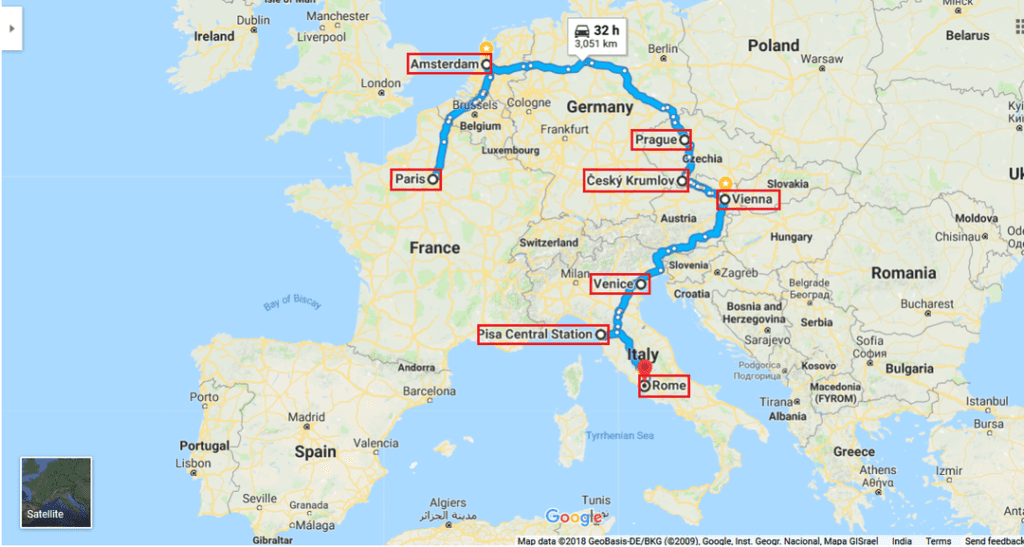
Europe contains 44 countries with vastly different cultures, languages and experiences. First-time visitors typically focus on Western Europe’s classic triangle combining France, Switzerland and Italy over 10-14 days. This route covers Paris’s romantic boulevards and Eiffel Tower, Switzerland’s Alps and scenic trains, plus Italy’s history in Rome, art in Florence and canals in Venice.
The Paris-Switzerland-Italy combination costs ₹2,00,000-₹3,50,000 per person for two weeks depending on season and hotel standards. Start in Paris spending 3 days exploring the Louvre museum, Notre Dame cathedral and Seine River cruises. Take trains to Switzerland for 4 days covering Zurich, Lucerne and mountain excursions to Jungfraujoch or Mount Titlis. Continue to Italy for 5-6 days visiting Rome’s Colosseum and Vatican, Florence’s Duomo, and Venice’s gondolas before flying home.
Spain and Portugal create alternative routes for travelers seeking warmer Mediterranean climates and lower costs. Barcelona’s Gaudi architecture, Madrid’s museums, Seville’s flamenco culture, and Portugal’s Lisbon and Porto cost 20-30% less than Switzerland while offering excellent food, beaches and history. This 12-14 day route runs ₹1,80,000-₹3,00,000 per person.
Eastern Europe delivers incredible value for budget-conscious travelers. Prague’s fairy-tale architecture, Budapest’s thermal baths, Vienna’s classical music heritage and Croatian coast cost 40-50% less than Western Europe. A 12-14 day Eastern Europe trip costs just ₹1,40,000-₹2,40,000 per person while offering equally impressive experiences with fewer crowds.
Multi-country packages covering 5-8 countries in 10-15 days exist but create rushed experiences. You’ll spend more time on buses between countries than actually exploring destinations. Better to choose 3-4 countries maximum and experience them properly rather than checking boxes across an entire continent.
Consider travel distances and logistics when planning routes. Paris to Switzerland to Italy flows logically with 4-6 hour train journeys between major cities. Mixing northern Scandinavia with southern Greece creates exhausting 3-4 hour flights and wasted travel days. Stick to regions—Western Europe, Southern Europe, Eastern Europe, or Northern Europe—within single trips.
Step 2: Decide Trip Duration and Season
Europe requires minimum 10 days to feel worthwhile after spending ₹80,000-₹1,60,000 on flights. Ideal first-time trips last 12-15 days covering 3-4 countries comfortably. Longer 18-21 day trips allow deeper exploration or additional countries but require more vacation days and higher budgets.
Peak summer season June-August brings perfect weather with temperatures 20-30°C across most of Europe. This period also delivers highest costs with accommodation 50-70% more expensive than winter, requires booking 4-6 months advance, and creates massive crowds at major attractions like the Eiffel Tower and Colosseum. Package costs peak at ₹2,50,000-₹3,50,000 per person during summer.
Shoulder seasons April-May and September-October offer the best value proposition. Weather remains pleasant at 15-25°C with occasional rain, crowds thin significantly after school holidays end, and prices drop 30-40% compared to peak summer. Spring brings blooming flowers while autumn delivers colorful foliage. Packages during shoulder seasons cost ₹1,80,000-₹2,80,000 per person.
Winter November-March creates the cheapest Europe travel with packages dropping to ₹1,60,000-₹2,40,000 per person. However, winter brings challenges including cold temperatures 0-10°C requiring heavy clothing, shorter daylight hours 8-9 hours limiting sightseeing time, and some attractions closing or reducing hours. Winter works well for Christmas markets in Germany and Austria, skiing in Swiss Alps, or travelers prioritizing budget over weather.
Indian school holidays heavily influence family travel timing. Summer vacation May-July forces families into expensive peak season. Better strategy involves planning trips during October-November Diwali holidays or March-April spring break when European weather stays pleasant while crowds remain manageable and costs reasonable.
Step 3: Calculate Your Complete Budget
Europe remains expensive for Indian travelers with the Euro conversion rate (₹1 = €0.011 or €1 = ₹92-95 approximately) making every expense feel doubled. A realistic 14-day Europe trip for two adults costs ₹3,68,800-₹7,20,600 covering all expenses.
Round-trip flights from Indian cities like Mumbai, Delhi or Bangalore to major European hubs Paris, London, Amsterdam or Frankfurt cost ₹40,000-₹80,000 per person. Book 3-6 months advance for best rates, watching promotional sales from Air India, Emirates, Lufthansa and British Airways. Peak summer flights (June-August) hit the ₹65,000-₹80,000 range while winter flights drop to ₹40,000-₹55,000.
Schengen visa fees cost ₹7,518 per adult (€80) plus VFS service charges ₹2,200-₹2,800, totaling approximately ₹9,800-₹10,300 per person. Children below 12 years receive free visas. Budget minimum ₹20,000-₹25,000 for couple visa expenses including photographs, travel insurance and document courier.
Mandatory travel insurance requires €30,000 (₹27-28 lakh) medical coverage for Schengen visa approval. Insurance costs ₹1,500-₹3,000 per person for two weeks through providers like ICICI Lombard, HDFC Ergo or Bajaj Allianz. Choose policies covering medical emergencies, trip cancellation, baggage loss and COVID-related issues.
Accommodation costs vary dramatically by city, season and standard. Budget hostels cost ₹2,000-₹4,000 per night for shared dormitories or basic private rooms. Mid-range hotels charge ₹5,000-₹10,000 nightly for comfortable doubles with private bathrooms and breakfast. Good 3-4 star hotels in prime locations cost ₹8,000-₹15,000 nightly. Luxury 5-star properties demand ₹20,000-₹40,000+ per night. For 14-day trips, accommodation totals ₹56,000-₹1,40,000 for couples choosing mid-range options.
Internal European transport depends on your route and style. Eurail passes cost ₹30,000 for two-month passes allowing 10 travel days—excellent value for multi-country trips. Individual train tickets between cities cost ₹3,000-₹8,000 depending on distance and booking timing. Budget flights on Ryanair or EasyJet cost ₹2,500-₹6,000 for longer distances like Paris-Rome. Metro passes in cities cost ₹500-₹1,200 daily. Budget ₹30,000-₹60,000 per couple for two-week internal transport.
Food expenses range widely based on choices. Supermarket groceries for breakfast and occasional meals cost ₹300-₹600 daily per person. Budget restaurant meals cost ₹800-₹1,500, mid-range restaurants ₹1,500-₹3,000, and upscale dining ₹3,500-₹7,000 per person. Realistic food budgets average ₹1,500-₹2,500 daily per person or ₹42,000-₹70,000 per couple for two weeks.
Attraction entry fees add up quickly. Popular sites charge ₹1,500-₹2,500 each—Eiffel Tower ₹2,000, Louvre ₹1,800, Colosseum ₹2,000, Vatican Museums ₹2,200. Museum passes in major cities save money if visiting multiple attractions. Budget ₹15,000-₹25,000 per person for 10-15 major attractions.
Shopping, miscellaneous expenses and emergency funds require additional ₹20,000-₹40,000 per person. Total realistic budgets for couples planning 14-day Europe trips: Budget backpacking ₹3,00,000-₹4,20,000 total, mid-range comfortable ₹4,50,000-₹6,50,000 total, upscale quality ₹6,50,000-₹9,00,000 total.
Step 4: Understand Schengen Visa Requirements
The Schengen visa allows Indians to visit 29 European countries on single visa valid for 90 days within 180-day period. Schengen countries include popular destinations France, Switzerland, Italy, Spain, Germany, Netherlands, Austria, Greece and 21 others.
You must apply to the embassy of the country where you’ll spend the most nights. If visiting France 5 nights, Switzerland 4 nights and Italy 4 nights, apply through the French embassy. If spending equal nights in multiple countries, apply to your first entry country. This rule confuses many applicants but determines which embassy processes your application.
Required documents include completed application form, valid Indian passport with 3+ months validity beyond return date and two blank pages, two recent passport photos (35x45mm, white background), confirmed flight reservations showing entry and exit from Schengen area, and confirmed hotel bookings for entire trip.
Financial documents prove you can afford the trip. Submit last 3-6 months bank statements showing sufficient balance (minimum ₹2,00,000 recommended), salary slips for employed applicants, or income tax returns for self-employed applicants. Banks shouldn’t show sudden large deposits appearing specifically for visa applications—maintain consistent healthy balances.
Cover letter explaining your trip purpose, itinerary overview, employment/business ties to India ensuring you’ll return, and family connections helps applications. Travel insurance with €30,000 minimum medical coverage remains mandatory.
Visa processing takes 15-45 days, though typically 15-20 days during non-peak periods. Apply 2-3 months before planned travel dates but not earlier than 6 months before departure as Schengen rules prohibit processing applications too far in advance. Visa fees cost ₹7,518 (€80) plus VFS service charges ₹2,200-₹2,800 totaling ₹9,800-₹10,300 per adult.
Step 5: Book Flights Strategically
European flight booking timing dramatically impacts costs. Search and track prices 6-8 months before travel, aiming to book 3-4 months ahead when airlines release competitive pricing. Prices spike 4-6 weeks before departure as cheap seats sell out.
Flying to major European hubs Paris Charles de Gaulle, Amsterdam Schiphol, Frankfurt or London Heathrow often costs less than flying directly to smaller cities. Many travelers fly to Paris then take trains throughout Europe rather than flying into Milan or Barcelona directly. Compare total costs including connections versus direct flights.
One-way tickets offer flexibility for multi-country trips. Flying into Paris and out of Rome (open-jaw tickets) eliminates backtracking to your arrival city, saving time and money. These cost slightly more than round-trip tickets to single cities but save on ground transport and wasted travel days.
Consider Middle Eastern carriers like Emirates, Qatar Airways and Etihad offering competitive rates with comfortable service and convenient connections through Dubai, Doha or Abu Dhabi. European carriers Lufthansa, KLM, Air France and British Airways sometimes cost more but provide direct flights saving 3-5 hours versus connections.
Budget airlines within Europe like Ryanair, EasyJet and Wizz Air charge just ₹2,500-₹6,000 for flights but add fees for checked baggage (₹1,500-₹3,000), seat selection (₹500-₹1,500) and credit card payments (₹200-₹400). Read fine print carefully—what appears cheap becomes expensive after fees. Book early morning flights for cheaper rates but factor taxi costs to airports for 5-6 AM departures.
Step 6: Plan Your Detailed Itinerary
Successful Europe trips balance planned activities with flexibility for spontaneous discoveries. Research must-see attractions for each destination but avoid overscheduling. Two major activities daily maximum prevents exhaustion from packing too much into limited time.
A typical 14-day Western Europe itinerary works as follows. Days 1-3 cover Paris exploring Eiffel Tower, Louvre museum, Notre Dame cathedral, Arc de Triomphe, Champs-Élysées shopping, Sacré-Cœur in Montmartre, and Seine River evening cruise. Day 4 travels to Switzerland staying in Lucerne. Days 5-7 explore Switzerland with Lucerne old town, Chapel Bridge, Mount Titlis or Jungfraujoch mountain excursions, and scenic Golden Pass train routes. Day 8 travels to Milan then Venice. Days 9-10 discover Venice’s Grand Canal, St. Mark’s Basilica, gondola rides and Murano glass island. Days 11-12 visit Florence seeing the Duomo, Uffizi Gallery, Ponte Vecchio and Tuscan countryside. Days 13-14 explore Rome covering the Colosseum, Roman Forum, Vatican Museums, Sistine Chapel, Trevi Fountain and Spanish Steps before departure.
Build rest mornings into schedules. After several intense sightseeing days, schedule half-days allowing sleep-ins, leisurely breakfasts, and afternoon activities only. This prevents burnout and helps families with children maintain energy throughout trips.
Book tickets online in advance for popular attractions. The Eiffel Tower, Louvre, Vatican Museums and Colosseum sell out or require 2-3 hour wait times without pre-booking. Online tickets cost the same or slightly more but guarantee entry and save valuable vacation hours standing in queues.
Research free activities reducing costs while experiencing authentic culture. Many European museums offer free entry on first Sundays monthly. Parks, cathedrals, neighborhood walking tours, and local markets provide excellent experiences at zero cost. Sunset viewpoints in every city create memorable moments without admission fees.
Step 7: Choose Package vs Independent Travel
Pre-arranged Europe packages from Indian operators like Thomas Cook, SOTC, Kesari and MakeMyTrip cost ₹35,200-₹3,50,000+ per person for 7-15 day trips. Packages include flights, hotels with breakfast, intercity transport, some sightseeing tours, and tour managers speaking Hindi and English.
Package advantages include complete convenience with zero planning required, organized logistics handling trains and hotels, group security for nervous first-time travelers, Indian meal options at restaurants included in itineraries, and fixed costs with minimal surprises. Packages work best for first international trips to Europe, families with elderly members needing assistance, travelers with limited English skills, and those uncomfortable navigating foreign countries independently.
However, packages carry significant limitations. Fixed itineraries prevent flexibility—if weather turns bad in Switzerland, you can’t extend mountain days or skip ahead. Group travel means compromising on pace, interests and restaurant choices to accommodate 20-40 people. “Sightseeing tours” rush through major attractions spending 45-60 minutes at the Louvre when 3-4 hours needed properly. Mandatory shopping stops at watch stores and chocolate factories waste 2-3 hours pressuring purchases. Hotels often sit on city outskirts rather than central locations, adding taxi costs and time. Package travelers miss authentic local experiences, spontaneous discoveries and genuine cultural immersion.
Independent planning costs similar overall but provides vastly more flexibility and authentic experiences. You choose exact hotels matching your preferences and budgets, eat at restaurants you select rather than group-meal venues, adjust plans based on weather and energy, explore at your own pace without rushing for group schedules, and experience cities beyond standard tourist circuits.
Independent travel requires comfortable planning time, basic English communication, willingness to handle unexpected issues, and confidence navigating public transport. Resources like Google Maps, Rome2Rio for transport, Booking.com for hotels, and GetYourGuide for activities make planning straightforward for moderately tech-savvy travelers.
Hybrid approaches combine benefits of both. Book flights independently finding better deals, arrange hotels through Booking.com or Airbnb selecting preferred locations and styles, then join day tour groups for specific activities like Vatican tours or Swiss mountain excursions. This provides independent flexibility while accessing group tours for complex or language-barrier activities.
Step 8: Book Accommodation Wisely
European accommodation ranges from ₹1,500 hostels to ₹50,000 luxury hotels creating confusion about appropriate spending levels. Focus on location over luxury—a basic hotel in central Paris near metro stations provides far better value than a beautiful hotel 45 minutes from attractions requiring ₹1,000 daily taxi rides.
Research neighborhoods carefully using Google Maps. Stay near major train stations or metro lines simplifying daily transport. Paris 1st-7th arrondissements keep you central to major sights. Rome’s historic center near Termini station or Trastevere neighborhood offer convenience. Swiss cities like Lucerne and Interlaken have compact centers where most hotels work well.
Book through Booking.com, Hotels.com or Agoda comparing prices and reading recent guest reviews. Pay attention to negative reviews mentioning cleanliness, noise, or location issues. Properties rated 8.0+ generally deliver satisfactory experiences while 9.0+ ratings indicate excellent quality. Book properties with free cancellation when possible allowing flexibility if plans change.
Consider Airbnb apartments for families or groups staying 3+ nights in single cities. Apartments provide kitchens allowing grocery shopping saving ₹500-₹1,000 daily on breakfasts and occasional dinners. Space and washing machines particularly valuable for longer trips. However, apartments lack daily cleaning and front desk services hotels provide.
Hostels suit solo travelers and young couples prioritizing budget over privacy. Modern hostels offer private rooms with shared bathrooms at ₹2,500-₹4,500 nightly—50% cheaper than budget hotels. Hostel common areas facilitate meeting fellow travelers, though noise and party atmosphere may disturb light sleepers.
Book accommodation immediately after visa approval. Waiting causes availability issues and price increases, especially during peak summer season. However, avoid booking non-refundable rates before visa approval—if visa gets rejected (uncommon but possible), you’ll lose all accommodation deposits.
Step 9: Prepare Practical Essentials
European power outlets use different plugs than India requiring universal travel adapters. Purchase adapters in India for ₹300-₹600 rather than paying ₹1,500-₹2,000 at European airports. Adapters accepting UK, European, US and Indian plugs provide maximum flexibility.
International roaming from Indian carriers costs ₹500-₹1,500 daily making it expensive for two-week trips. European SIM cards offer better value at €20-40 (₹1,850-₹3,700) providing 10-20 GB data and unlimited calling within Europe for 28 days. Purchase SIM cards at airports immediately after arrival from Vodafone, Orange or Three. Ensure your phone supports international SIM cards (not locked to Indian carriers) before departure.
Credit cards remain essential for European travel. Visa and Mastercard work widely at hotels, restaurants, attractions and shops. Inform banks of international travel dates preventing fraud blocks. Cards offering zero foreign transaction fees (HDFC Diners Black, ICICI Coral, SBI Elite) save 3.5% conversion charges adding up significantly across two-week trips.
Carry €300-500 (₹27,000-₹46,000) cash for immediate arrival expenses like airport trains, first meals, and small vendors accepting only cash. Exchange currency through authorized dealers or banks in India rather than airport exchanges charging 5-8% worse rates. Additional cash withdrawals work through European ATMs charging ₹200-₹400 per transaction.
Pack weather-appropriate clothing checking forecasts for each destination. European buildings lack air conditioning with summer temperatures inside hotels reaching 26-30°C even when outside weather feels cool. Light layers, comfortable walking shoes (plan on 15,000-25,000 steps daily), and rain jacket work for most seasons. Winter requires heavy coats, gloves and scarves for 0-10°C temperatures.
Many churches and religious sites require shoulders and knees covered. Carry a light scarf or shawl allowing temple/church entry without returning to hotels changing clothes. This saves time and prevents missing last-minute entry opportunities.
Travel-size toiletries last 1-2 weeks and meet cabin baggage restrictions if avoiding checked luggage. European pharmacies stock familiar brands if you run out. However, prescription medications should come from India with doctor’s letters explaining requirements in case customs questions medication.
Making Your Europe Dream Reality
Europe trip planning feels overwhelming initially but becomes manageable following systematic steps. Start 6-8 months before desired travel dates researching destinations matching your interests—history and art in Italy, mountains and scenery in Switzerland, food and culture in France and Spain, or budget-friendly experiences in Eastern Europe.
Decide between package convenience costing ₹2,00,000-₹3,50,000 per person or independent planning offering flexibility and authenticity at similar total costs. Set realistic budgets understanding Europe costs more than Southeast Asian destinations but delivers once-in-lifetime experiences justifying expenses.
Apply for Schengen visas 2-3 months before travel with complete documentation including bank statements, hotel bookings and travel insurance. Book flights 3-4 months ahead watching promotional sales and considering connections through Middle Eastern hubs versus direct European carriers.
Plan detailed but flexible itineraries covering 2-3 major activities daily while building rest time preventing exhaustion. Book popular attractions online in advance avoiding 2-3 hour queues at the Eiffel Tower, Louvre and Vatican. Choose accommodation in central locations near metro stations rather than cheaper hotels on city outskirts requiring expensive daily taxis.
Prepare practical essentials including power adapters, European SIM cards, credit cards with zero foreign transaction fees, and appropriate clothing for season and activities. Carry €300-500 cash for immediate expenses while using cards for larger purchases.
Europe delivers magical experiences across all budgets when planned realistically and executed flexibly. Whether spending ₹2,00,000 per person for budget travel or ₹4,00,000+ for comfortable experiences, the continent rewards Indian travelers with stunning architecture, incredible history, diverse cultures and memories lasting lifetimes. Start planning today—your European adventure awaits.