
You’ve saved money, researched destinations, and cleared vacation dates with your family. Now comes the hardest decision: should you book that ₹1,50,000 Sri Lanka package with leopard safaris and tea plantations, splurge ₹3,50,000 on Maldives overwater villas, or split the difference with a ₹2,20,000 Thailand beach and temple adventure?
Each destination promises an unforgettable international escape from India, but they deliver completely different experiences. Sri Lanka packs wildlife safaris, ancient UNESCO sites, pristine beaches and mountain tea estates into a compact week-long journey—perfect for families wanting maximum variety on a budget. The Maldives offers the world’s most pristine beaches with powdery white sand and crystal-clear lagoons, ideal for honeymooners and luxury seekers willing to pay premium prices. Thailand blends bustling cities, ornate temples, island hopping and incredible street food with the region’s best tourist infrastructure.
This honest comparison breaks down real costs, beach quality, activity options, food availability and weather patterns to help you choose the perfect destination for your travel style, budget and family priorities in 2026.
Quick Comparison: At a Glance
Flight Time from India: Sri Lanka takes just 1.5 hours from Mumbai or Chennai—shorter than flying to Delhi. Maldives sits equally close at 1.5-2 hours. Thailand requires 5.5 hours from Mumbai, making it a longer commitment for families with young children.
Visa Requirements: All three destinations welcome Indians visa-free for 30 days. Sri Lanka and Maldives offer free on-arrival entry, while Thailand provides visa exemption at immigration.
Budget Reality Check: Sri Lanka costs ₹1,00,000-₹1,80,000 for a family of four spending 7 days. Thailand ranges ₹1,60,000-₹2,40,000 for 5 days covering Bangkok and beaches. Maldives demands ₹2,80,000-₹4,20,000 for just 5 days due to expensive resort stays and transfers.
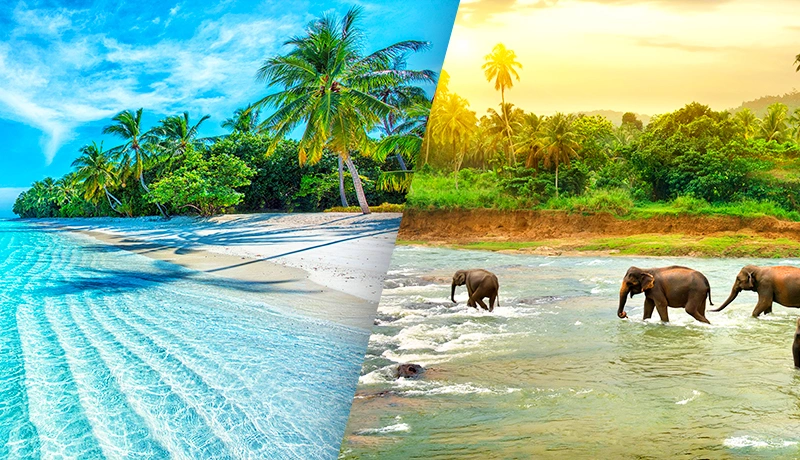
Beach Quality Rankings: Maldives wins the beach perfection contest with its iconic white sand and turquoise waters that look photoshopped. Thailand offers the most beach variety, from party-focused Patong to family-friendly Kata to pristine Railay Beach. Sri Lankan beaches surprise visitors with their golden sands and fewer crowds at Mirissa, Unawatuna and Tangalle—delivering excellent quality at 60% lower prices.
Activity Diversity: Sri Lanka dominates with wildlife safaris spotting leopards and elephants, eight UNESCO World Heritage sites including Sigiriya Rock Fortress, scenic train journeys through tea country, and beaches for surfing or whale watching. Thailand provides temple tours, floating markets, island hopping, cooking classes and vibrant nightlife. Maldives limits activities to water sports, diving, spa treatments and resort relaxation.
Food for Indian Travelers: Thailand leads for vegetarians with abundant meat-free Thai dishes plus 200+ Indian restaurants in Bangkok alone. Sri Lankan cuisine feels like home with rice and curry meals similar to South Indian food, and locals understand vegetarian requirements perfectly. Maldives traps you at resort buffets with limited exploration beyond your accommodation.
Budget Battle: Where Your Money Goes Furthest
Sri Lanka Delivers Maximum Value
Sri Lankan vacations stretch Indian rupees further than any nearby destination. A typical 7-day family trip costs ₹1,00,000-₹1,80,000 for four people while delivering experiences that would cost triple in the Maldives.
Breaking down the costs shows where savings emerge. Round-trip flights from Mumbai to Colombo cost just ₹30,000-₹50,000 for the family thanks to the short 1.5-hour journey and competitive pricing from multiple airlines. Accommodation ranges ₹3,500-₹7,000 per night for comfortable family rooms or boutique guesthouses—places like jungle lodges near Yala National Park or heritage homes in Galle Fort offer character at reasonable rates.
Transportation costs stay manageable whether you hire a private driver with car for ₹3,500-₹4,500 daily or mix scenic train journeys like the famous Kandy-Ella route that costs just ₹200-₹800 per person. Activity expenses remain budget-friendly with wildlife safaris costing ₹4,000-₹6,000 per jeep that seats six people, temple admissions around ₹500-₹1,000 each, and whale watching trips from Mirissa at ₹4,000 per adult. Beach access stays completely free.
The real budget advantage shows up at mealtimes. Sri Lankan “rice and curry” thalis cost ₹300-600 per person for unlimited helpings of rice with 4-6 vegetable curry sides—similar portions to South Indian meals at similar prices. Street food drops costs even lower to ₹100-250 per snack. The cost of living runs 45% below Maldives prices across the board.
Sri Lanka’s compact geography means traveling from beaches to mountains to wildlife parks rarely takes more than 3-4 hours, cutting transport time and expense. You can realistically experience wildlife safaris, cultural sites, tea plantations and beaches in a single week without rushing.
Thailand Offers Mid-Range Value
Thailand costs 30-40% more than Sri Lanka but justifies the premium with superior infrastructure and tourist conveniences. A typical 5-day Bangkok-Pattaya trip for four people runs ₹1,60,000-₹2,40,000.
The longer 5.5-hour flight increases costs significantly, with return tickets for the family totaling ₹60,000-₹1,00,000 depending on season and advance booking. Hotel standards run higher than Sri Lanka, with family-friendly properties offering pools and breakfast costing ₹4,000-₹6,000 nightly. Popular packages show this pricing clearly—Bangkok-Pattaya deals range ₹40,000-₹60,000 per person for 5-6 days.
Transportation within Thailand stays affordable thanks to excellent public transit in Bangkok. The BTS Skytrain and MRT metro make city navigation cheap and easy, while Bangkok-Pattaya transfers cost ₹3,500-5,000 for the family. Activity pricing runs higher with per-person charges—Coral Island tours cost ₹6,000-₹8,000 for four, cultural shows like Alcazar Cabaret run ₹4,000-₹6,000, and attractions like SEA LIFE Ocean World add ₹7,000-₹9,000 to the budget.
Restaurant meals average ₹400-700 per person, though street food and mall food courts offer cheaper ₹150-500 alternatives. Thailand’s developed tourism infrastructure means more attractions charge admission compared to Sri Lanka’s many free or low-cost sites.
Maldives Commands Luxury Pricing
Maldives trips cost 2.5-3 times more than Sri Lanka for similar duration, with even “budget” Maldives holidays starting at ₹2,80,000 for a family of four spending 5 days. Package deals reveal this pricing reality—combined Sri Lanka-Maldives trips cost ₹1,75,000-₹2,07,000 per person, with the Maldives portion consuming most of the budget.
Flights cost ₹50,000-₹80,000 for the family despite the short 1.5-2 hour journey, as fewer carriers and less competition keep prices elevated. Resort accommodation drives costs skyward, with even 3-star properties charging ₹6,000-₹10,000 per night per room, mid-range 4-star resorts demanding ₹12,000-₹20,000, and luxury overwater villas starting at ₹30,000 nightly.
The budget killer comes from resort transfers. Reaching your island accommodation requires seaplanes at ₹20,000-₹30,000 per person return, speedboats at ₹8,000-₹15,000 per person, or domestic flights at ₹10,000-₹20,000. These transfers alone can exceed entire Sri Lankan vacation budgets.
Resort dining expenses spiral quickly at ₹2,000-₹4,000 per person per meal, making all-inclusive packages essential for budget control. Water sports and activities add ₹2,000-₹8,000 per person per activity. Local island guesthouses on inhabited islands like Maafushi offer cheaper alternatives at ₹3,000-₹5,000 nightly, but you sacrifice the luxury resort experience that defines Maldives tourism.
The cost of living runs 45-75% higher than Sri Lanka since everything must be imported to isolated islands with no local agriculture or manufacturing. Resort monopoly pricing marks up food, drinks and services by 200-300% compared to local costs.
For budget-conscious Indian families, Sri Lanka delivers the most experiences per rupee spent, with Thailand offering better infrastructure at moderate premium, while Maldives remains a splurge destination best saved for special occasions.
Beach Paradise: Comparing Sand and Sea
Maldives Sets the Global Standard
The Maldives earned its reputation as the world’s ultimate beach destination for valid reasons. Every resort island delivers powdery white sand so fine it resembles flour, water displaying impossible shades of turquoise and azure, and coral reefs teeming with tropical fish just meters from shore.
The consistency amazes first-time visitors—every beach maintains pristine conditions with no rocky patches, seaweed or pollution. Resort staff maintain perfect conditions daily, raking sand and clearing any debris. Most resort islands provide exclusive beach access with zero crowds, letting families claim entire stretches of paradise.
Protected lagoons created by outer coral reefs offer calm, shallow water that stays waist-deep 30-50 meters from shore, perfect for toddlers and nervous swimmers. Water clarity reaches 20-30 meters visibility, letting you watch tropical fish, baby reef sharks and rays swimming around your legs while standing in ankle-deep water. The Indian Ocean maintains constant 27-30°C temperatures year-round, eliminating cold shock even during “winter” months.
Snorkeling from the beach provides access to house reefs without needing boats or guides. Many resorts feature world-class dive sites within their marine protected areas, attracting manta rays and seasonal whale sharks. Select islands experience bioluminescent plankton that makes water glow blue at night, creating magical evening swimming experiences.
The limitation shows up in sameness—while every beach looks beautiful, they offer minimal variety. One resort equals one beach, with island hopping expensive and time-consuming.
Thailand Provides Beach Variety
Thailand cannot match Maldives perfection but compensates with incredible diversity. Different beach towns cater to different travelers, from party beaches to pristine islands to family-friendly bays.
Phuket alone offers multiple beach personalities. Kata and Karon beaches attract families with lifeguards, calm dry-season waters, nearby restaurants and gentle slopes perfect for children. Patong Beach draws the party crowd with its commercial vibe, water sports and nightlife, though it gets busy. Mai Khao Beach stretches undeveloped for kilometers with luxury resorts and quiet atmosphere, while Nai Harn Beach provides beauty without heavy development.
The Andaman coast islands deliver adventure—Railay Beach backed by dramatic limestone cliffs accessible only by boat, Phi Phi Islands including the famous Maya Bay from “The Beach” movie, and easy island-hopping excursions. Gulf coast islands offer different experiences with Chaweng Beach on Koh Samui providing long stretches of sand with water sports and dining, while secluded spots like Bottle Beach on Koh Phangan require boat access but reward with pristine conditions.
Thai beaches provide value through free public access, water sports costing 50% less than Maldives, abundant beachfront restaurants and easy island hopping on ferries costing just ₹500-1,500 per person. Water clarity reaches good levels at 10-15 meters visibility, though not matching Maldives standards. The variety means families can experience multiple beach types in a single trip.
Monsoon patterns affect both coasts at different times—the Andaman Sea sees rough conditions May-October while Gulf islands experience occasional rain November-January, requiring seasonal planning.
Sri Lanka Surprises with Value Beaches
Sri Lankan beaches remain seriously underestimated by Indian travelers, yet deliver golden sand, Indian Ocean waves, palm tree backdrops and far fewer crowds at 60-75% lower costs than competitors.
Mirissa offers a crescent bay with golden sand and gentle waves that attract surfers and swimmers. The area serves as Sri Lanka’s whale watching hub, with blue whales—Earth’s largest animals—spotted on 90% of trips during November-April season. Beach restaurants serve fresh seafood and vegetarian rice and curry while surf schools teach beginners. The relaxed vibe suits families and couples equally.
Unawatuna creates a horseshoe-shaped bay with calm waters and nearby coral reefs perfect for snorkeling. The beach sits walking distance from UNESCO-listed Galle Fort, combining beach time with cultural exploration. Sea turtles frequent the area, and multiple restaurants and cafes line the shore.
Tangalle provides long, empty beaches that remain undeveloped except for emerging luxury resorts. The pristine, peaceful setting attracts honeymooners and those seeking solitude. Sea turtles nest on these beaches during season, offering wildlife encounters beyond typical beach experiences.
Arugam Bay on the east coast ranks among the world’s top 10 surf destinations. The backpacker hub offers smaller waves near shore ideal for learning, while experienced surfers tackle bigger breaks. This coast operates on opposite monsoon timing—May-September provides perfect conditions when Maldives and Thailand’s Andaman coast face rough weather.
Sri Lankan beaches feature wild, rugged beauty with huge sweeping stretches of sand fringed by palm trees swaying in ocean breezes. Swimming conditions vary by location and season—beaches like Unawatuna and the East Coast allow safe swimming, while others require caution regarding tides and currents. Beachfront guesthouses cost ₹2,000-₹4,000 nightly compared to Maldives resorts at ₹12,000-₹30,000, delivering remarkable value.
Water clarity reaches 8-12 meters visibility—good quality though not matching Maldives standards. The variety within Sri Lanka includes surf beaches, snorkel bays, quiet coves and active beach towns, all accessible within the country’s compact geography. Whale and dolphin watching, plus sea turtle conservation projects, add wildlife dimensions missing from typical beach destinations.
For pure beach perfection, Maldives wins decisively. For beach variety and activities, Thailand excels. For excellent beaches at fraction of competitor costs, Sri Lanka delivers remarkable value that often exceeds traveler expectations.
Activity Paradise: Beyond the Beach
Sri Lanka Packs Maximum Diversity
Sri Lanka compresses absurd diversity into an area smaller than Tamil Nadu. A single week-long journey encompasses wildlife safaris, ancient temples, mountain tea estates and coastal beaches—variety impossible to match nearby.
Yala National Park boasts the highest leopard density globally, offering realistic chances of spotting these elusive big cats during morning or evening game drives. The park also shelters elephants, sloth bears, crocodiles and 215 bird species. Udawalawe National Park guarantees elephant sightings with herds of 100-150 individuals per drive, while Minneriya hosts “The Gathering” where 300+ elephants congregate during July-October. Whale watching from Mirissa provides encounters with blue whales, the planet’s largest animals, on 90% of trips during season.
Eight UNESCO World Heritage sites dot the island. Sigiriya Rock Fortress features a 5th-century palace atop a 200-meter rock formation. Ancient cities Anuradhapura and Polonnaruwa showcase massive stupas, monasteries and Buddha statues. Kandy Temple houses Buddhism’s most sacred tooth relic. Dutch colonial architecture fills Galle Fort with boutique hotels and cafes. Dambulla Cave Temples display ancient paintings and giant Buddha statues carved into rock faces.
The hill country provides dramatic landscape changes. Nuwara Eliya sits at cool elevations with British colonial architecture and surrounding tea plantations. Ella offers mountain vistas, the photogenic Nine Arch Bridge and Little Adam’s Peak hiking trail. The Kandy-to-Ella train journey ranks among the world’s most scenic, winding through tea valleys and mountain passes.
Adventure activities include white water rafting at Kitulgala, waterfall rappelling, surfing at Arugam Bay and Weligama, and hiking sacred Adam’s Peak mountain. Every day brings completely different experiences—morning chasing leopards through dry jungle, afternoon touring ancient Buddhist temples, evening watching sunset over tea plantations, next day snorkeling with sea turtles.
Thailand Blends Culture and Adventure
Thailand delivers excellent activity variety though spread across larger geography requiring more travel time. The cultural depth centers in Bangkok with the Grand Palace complex, Wat Pho’s massive reclining Buddha, riverside Wat Arun temple and authentic floating markets. Chiang Mai in the north features 300+ temples, night bazaars, hill tribe villages and Doi Suthep mountaintop temple.
Ethical elephant sanctuaries like Elephant Nature Park charge ₹6,000 for day visits focused on observation and feeding rather than riding. Thai cooking classes teach pad thai and curry preparation, while traditional dance performances and Muay Thai boxing demonstrations showcase cultural heritage. Bangkok’s massive Chatuchak Weekend Market sprawls across 15,000 stalls selling everything imaginable.
Island hopping provides adventure variety. Andaman routes connect Phuket to Phi Phi Islands to Krabi’s Railay Beach, while Gulf routes link Koh Samui to party-focused Koh Phangan to diving mecca Koh Tao. Each island develops distinct character—luxury resorts versus backpacker hangouts versus diving communities. Long-tail boat tours explore hidden lagoons and sea caves around Phang Nga Bay.
Urban experiences define Thailand’s appeal with modern malls like Siam Paragon, rooftop bars offering skyline views, and street food tours through neighborhoods. The BTS Skytrain makes Bangkok navigation easy for families. Family-friendly evening shows like Alcazar Cabaret and Siam Niramit provide cultural entertainment suitable for all ages.
Thailand requires 10-14 days to fully experience the diversity—combining northern culture around Chiang Mai, central Bangkok exploration and southern island beaches. Shorter 5-7 day trips typically focus either on cities or beaches rather than both comprehensively.
Maldives Limits Activities by Design
Maldives intentionally narrows its focus to create both appeal and limitation. The experience centers entirely on beach and water activities—snorkeling, diving, swimming, kayaking and paddleboarding. Luxury resort amenities include overwater villas, private pools, butler service and extensive spa facilities. Marine life encounters feature manta rays, seasonal whale sharks, tropical fish schools and sea turtles visible from shore.
Sandbank picnics offer private island lunch experiences, while sunset cruises and couples massages cater to honeymooners. Yoga and meditation classes utilize the peaceful setting. Some resorts provide water sports like jet skiing and parasailing, though at premium ₹3,000-₹8,000 prices per activity.
Cultural experiences remain minimal. Male capital city features few mosques, a small national museum and fish market, though most tourists never visit inhabited islands. No wildlife exists beyond marine species. Shopping limits to resort boutiques and airport duty-free. The flat coral islands offer no hiking, mountains or adventure activities. Limited local food access means resort dining dominates the culinary experience.
This philosophy embraces “less is more”—one resort, one beach, one focus on pure relaxation and marine experiences. The approach suits travelers explicitly seeking escape from variety and stimulation, but frustrates those craving diverse activities.
For families wanting to maximize different experiences per vacation day, Sri Lanka delivers unbeatable activity density. Thailand rewards longer stays with depth across culture, beaches and urban energy. Maldives serves travelers who specifically desire limited activity options and pure beach focus.
Food Experience: What You’ll Actually Eat
Thailand Welcomes Vegetarian Travelers
Thailand offers the most vegetarian-friendly experience for Indian travelers. Numerous Thai dishes translate perfectly to meat-free diets—Pad Thai Jay removes fish sauce for vegetarian pad thai at ₹150-250, Tom Yum Het serves spicy mushroom soup at ₹180-300, stir-fried mixed vegetables cost ₹120-200, and vegetarian fried rice runs ₹150-250. Spring rolls, green and red curries with tofu, and the beloved mango sticky rice dessert all avoid meat.
Indian restaurants saturate tourist areas with 200+ options in Bangkok, 50+ in Pattaya, and 30+ even in smaller Phuket. Pure vegetarian spots include ISKCON’s Govinda restaurants, while mainstream Indian restaurants serve North Indian tandoor and butter chicken alongside South Indian dosas and filter coffee in major cities. Some restaurants specifically cater to Jain dietary restrictions, though these remain limited.
Communication becomes simple after learning key phrases—”Jay” means vegetarian, while “mai sai nam pla” requests no fish sauce. Most tourist area servers understand English and provide picture menus. Every shopping mall features food courts with 30-50 stalls showing clear photos, offering Thai, Chinese, Indian and Western options at ₹200-400 per person where everyone finds something suitable including picky children.
Street food requires caution but remains largely accessible. Fresh fruit, mango sticky rice, grilled corn and coconut ice cream stay safe. Popular stalls with high customer turnover generally maintain freshness. Papaya salad typically contains fish sauce and dried shrimp, requiring avoidance. Western backup options like pizza, pasta and burgers appear widely at reasonable prices—a safety net for extremely selective eaters.
Hidden fish sauce sneaks into many Thai dishes, making it essential to specifically request omission. Thai spice levels can shock even Indian palates accustomed to heat—always request mild initially. Jain travelers find onion and garlic pervasive in Thai cooking, limiting options significantly.
Sri Lanka Provides Comfort Food
Sri Lankan cuisine mirrors South Indian food, creating immediate comfort for Indian travelers. The standard meal centers on rice and curry—unlimited rice with 4-6 curry sides featuring vegetables like dhal, potato, green beans, pumpkin and eggplant. Familiar spices including curry leaves, mustard seeds, coconut and tamarind season the dishes. These “hotel” thalis cost just ₹300-600 per person.
Hoppers replicate Kerala and Tamil Nadu appam—rice flour crepes served plain or with egg. String hoppers match idiyappam—steamed rice noodles. Roti resembles Indian parathas. Kottu features chopped roti stir-fried with vegetables in vegetarian versions. Dhal curry tastes identical to Indian dhal. Coconut sambol serves as spicy relish like chutney.
Buddhist culture ensures vegetarian food receives respect and easy availability. Many local restaurants prominently offer pure vegetarian options. Tamil influence in northern Sri Lanka and parts of Colombo brings authentic Tamil Nadu cuisine—dosa, idli, vadai and sambar tasting exactly like home. Roadside stalls sell South Indian snacks like masala dosa, vada and samosas for as little as 50 cents USD.
Kitchen staff accommodate “no onion, no garlic” requests more willingly than Thailand, though widespread Jain infrastructure remains absent. Sri Lanka ranks as paradise for vegans alongside India, Bhutan and Nepal—servers can be trusted when they confirm dishes are vegetarian or vegan, unlike some countries where definitions blur.
The cuisine offers less variety than Thailand, mostly presenting rice and curry variations. Spice levels run high and can challenge children unused to heat—requesting mild versions helps. Smaller towns provide limited Western food backup compared to tourist-heavy Thailand. International restaurant selection outside Colombo and major tourist centers stays modest.
Maldives Depends on Resort Quality
Maldives food experiences depend entirely on resort choice. A la carte resort dining reaches absurd ₹2,000-₹4,000 per person per meal, making all-inclusive packages costing ₹15,000-₹30,000 extra per person essential for budget control.
Better resorts include Indian cuisine at buffets—biryani, butter chicken, curries, naan and papad. Quality varies dramatically with 5-star resorts preparing authentic dishes while 3-star properties serve questionable interpretations. Vegetarian buffet options always appear but selections remain limited to what that specific resort chooses to offer.
The captive situation prevents eating outside resorts since reaching other islands requires expensive boat transfers. No street food adventures happen. No local restaurant hopping occurs. You experience only what your resort provides for the entire stay.
Local island guesthouses on inhabited areas like Maafushi and Gulhi offer alternatives. Small local restaurants serve Maldivian fish curry unsuitable for vegetarians, limited vegetarian rice and vegetable options, and emerging Indian restaurants charging ₹800-1,500 per person. Variety falls far below Thailand and Sri Lanka standards on local islands.
For foodie families or those with dietary restrictions, Thailand’s combination of vegetarian Thai dishes, abundant Indian restaurants, food courts and international options makes it unbeatable. Sri Lankan cuisine provides comfort and familiarity at great value. Maldives delivers adequate resort buffets but eliminates the culinary exploration that enriches Thailand and Sri Lanka experiences.
Choosing Your Perfect Destination
Pick Sri Lanka If You Want
Budget-conscious families with ₹1-2 lakh to spend get maximum experiences for minimum money. First-time international travelers appreciate the shortest flight, easiest logistics and cultural familiarity that makes challenges manageable. Wildlife enthusiasts chase leopards, elephants and blue whales in compact geography at quarter of Africa safari costs.
Multi-interest families avoid boredom with daily variety—safaris one day, temples the next, beaches following, then tea plantations. Children stay engaged with constantly changing scenery. Photography enthusiasts capture diverse landscapes from jungles to beaches to tea valleys to ancient ruins within small distances. Travelers with just 5-7 days available can comfortably see highlights without rushing.
Visit November-March for West and South coast beaches plus Yala safari during dry perfect weather. The East coast including Arugam Bay offers the opposite May-September season when Maldives and Thailand face monsoons—making Sri Lanka the smart choice for summer vacation travel.
Pick Maldives If You Want
Honeymooners seeking overwater villas, private beach dinners and couples spa treatments find romance perfection worth the premium. Luxury seekers with ₹4+ lakh budgets for couples embrace world-class resorts delivering exclusive experiences. Diving and snorkeling enthusiasts justify costs with manta rays, whale sharks and pristine coral reefs accessible from shore.
Pure relaxation seekers explicitly want zero activities beyond beach, spa and swimming—no sightseeing, shopping or cultural tours, just peace. Milestone celebrations like major anniversaries or birthdays deserve luxury splurges. Beach perfectionists refuse to compromise on sand and water quality, requiring powdery white sand, crystal-clear turquoise water and zero crowds.
Short 3-5 day beach vacations work perfectly—Maldives needs less time than Sri Lanka or Thailand to appreciate. Returning travelers who already experienced diverse destinations like Sri Lanka and Thailand now want pure luxury focus. Visit November-April during dry season for calm seas and perfect snorkeling conditions, avoiding May-October monsoon that brings rain and rough water limiting activities.
Pick Thailand If You Want
Foodies explore street food, Thai cuisine, cooking classes and diverse restaurant scenes from mall food courts to rooftop dining. Shoppers attack Chatuchak’s 15,000 stalls, countless malls, bargaining opportunities and souvenir hunting. Nightlife seekers find rooftop bars, night markets and entertainment shows, with family-friendly cultural performances also available.
Island hoppers experience multiple personalities—Phuket luxury, Phi Phi parties, Koh Tao diving—on easy ferry connections. Cultural explorers tour Buddhist temples, floating markets, hill tribes and traditional performances. Repeat visitors discover Thailand rewards multiple trips—Bangkok one time, Chiang Mai next, islands another—always offering something new.
Theme park families keep kids engaged with water parks, safari parks, aquariums and cultural shows abundant throughout the country. Mid-range ₹1.6-3 lakh budgets find better value than Maldives with superior infrastructure than Sri Lanka. Longer 7-14 day trips let you combine northern culture, central Bangkok and southern islands comfortably without rushing.
Visit November-February during cool season for perfect weather everywhere. Brave the heat March-May for Songkran water festival in April. Choose June-October monsoon season for budget travel, with Koh Samui offering opposite dry season when mainland Thailand faces rain.
The Honest Final Verdict
For most Indian families reading this guide, the smart progression starts with Sri Lanka for ₹1,20,000-₹2,00,000 delivering an unforgettable first international experience in 7 days. The 1.5-hour flight removes intimidation. The cultural familiarity eases anxiety. The budget allows mistakes without financial disaster. The variety teaches you what type of international traveler you become—safari lover, beach enthusiast, culture seeker or mountain explorer.
Second trips expand to Thailand at ₹2,00,000-₹3,00,000 for comprehensive 7-10 day adventures combining temples, islands and urban energy. The superior infrastructure and tourist services justify the premium. The food variety delights vegetarian families. The shopping and activities keep everyone engaged.
Special occasions and honeymoons deserve Maldives splurges at ₹3,50,000-₹6,00,000 for 5-day luxury escapes. After experiencing Sri Lankan variety and Thai culture, you properly appreciate Maldives’ singular focus on beach perfection and resort indulgence. The powdery sand and overwater villas create memories justifying the premium pricing—but only after building international travel confidence elsewhere first.
All three destinations create magical memories. The “best” choice depends entirely on your budget, travel style and priorities. But for families planning their next international trip in 2026, Sri Lanka offers the most memorable, diverse and affordable experience just 1.5 hours from Indian cities—making it the confident first step into international travel.